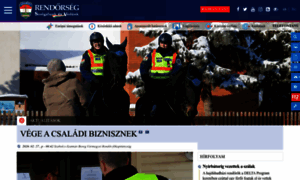
Police.hu: A Deep Dive into Hungary's Critical Digital Hub
Police.hu stands as the official online gateway to the Hungarian National Police, serving as a crucial digital resource for millions. As the primary communication channel between law enforcement and the public, its performance, reliability, and reach are paramount. With recent analytics revealing 2.69 million visits in February 2026 and a consistent top rank within Hungary, Police.hu clearly occupies a significant position in the nation’s digital landscape. This article will thoroughly analyze the website's traffic, engagement metrics, SEO performance, and reliability, offering insights into its current standing and potential areas for future enhancement.
Since its tracking began in April 2011, Police.hu has demonstrated a fluctuating but generally strong presence. Hosted by entities like the Republic of Hungary and the National Infocommunications Service Company Limited by Shares, its foundation is rooted in state infrastructure. The website's journey has seen it achieve global ranks as high as 74,717 and a peak Hungarian rank of 201 historically. The most recent data, however, paints an even more impressive picture of its current reach and relevance.
Police.hu's Dominance in the Hungarian Digital Landscape
The latest statistics for February 2026 underscore Police.hu's significant footprint. Achieving a global rank of 17,830 and an impressive country rank of 106 in Hungary, the website firmly establishes itself as a leading online destination for Hungarian internet users. This local prominence is particularly notable for a government portal, suggesting high public trust and frequent access to official information.
The sheer volume of traffic – 2.69 million visits in a single month – highlights the critical role Police.hu plays. This robust number indicates that a substantial portion of the Hungarian population relies on this platform for various needs, whether it's checking official announcements, accessing public services, or seeking information related to law enforcement. For any national institution, maintaining such high traffic figures is a testament to its necessity and effective digital outreach, even if there are areas for improvement. The site's Authority Score of 58 further reinforces its credibility and strength within the digital ecosystem, reflecting a healthy backlink profile and domain reputation. This score is a key indicator for search engines, signaling Police.hu as a trustworthy and authoritative source of information.
Diving Deep into Visitor Engagement and Traffic Trends
Beyond raw visit numbers, understanding how users interact with Police.hu offers valuable insights into its effectiveness. In February 2026, the website recorded an average session duration of 08 minutes and 11 seconds. This is an exceptionally high engagement metric for a public service website, where users often visit to quickly find specific information and then leave. A session duration of over eight minutes suggests that visitors are not just landing on the homepage but are actively navigating through multiple pages, consuming content, and likely finding the information they seek. This sustained engagement is a strong indicator of valuable content and a user-friendly structure.
Furthermore, an average of 2.63 pages per visit complements the high session duration, reinforcing the idea that users are exploring the site in depth. They are moving beyond their initial landing page to investigate related articles, forms, or departmental information. While these engagement metrics are positive, the recorded bounce rate of 62.66% warrants attention. A bounce rate of this level implies that nearly two-thirds of visitors leave after viewing only one page. For a site like Police.hu, this could mean several things:
- Specific Information Seeking: Many users might arrive with a very specific query, find the answer quickly on the landing page (e.g., an address, a news update, an emergency number), and then exit without needing to browse further.
- Entry Point Issues: Some landing pages might not effectively guide users to related content, leading to early exits for those who need more comprehensive information.
- User Experience Gaps: While overall engagement is good, certain sections might still have usability issues that cause users to abandon their visit prematurely.
It's also important to note the reported 5.86% decrease in traffic compared to January. While a single month's fluctuation might be seasonal or event-driven, continuous monitoring is essential. Potential reasons could include fewer major news events requiring police updates, seasonal dips in online activity, or shifts in search engine algorithms. Understanding the root cause of such dips can help in strategizing content and outreach efforts to maintain consistent traffic.
Navigating the Digital Footprint: SEO, Socialization, and Safety
The digital footprint of Police.hu presents a mixed bag of strengths and weaknesses from an SEO perspective. Historically, the website has boasted a high Google PageRank, a testament to its authoritative status and the quality of its domain. While Google's PageRank is no longer publicly visible in the same way it once was, a strong historical score indicates a robust foundation for current SEO performance, suggesting that Police.hu benefits from a strong backlink profile and overall domain authority, which helps it rank well in Google search results.
However, the picture is different with other search engines, specifically Yandex. The site exhibits "bad results in terms of Yandex topical citation index." This suggests that for users reliant on Yandex, particularly within Russian-speaking communities or regions where Yandex holds market share, Police.hu might not appear as prominently for relevant searches. This could indicate a missed opportunity to reach a broader audience or provide information to specific demographics who might rely on this search engine.
Perhaps one of the most significant areas for improvement lies in Police.hu's "socialization." The reference context explicitly states that Police.hu is "poorly ‘socialized’ in respect to any social network." In an era dominated by social media, where information spreads rapidly and communities engage directly with public institutions, this lack of social presence is a considerable oversight. For a national police force, social media platforms offer invaluable avenues for:
- Real-time Public Alerts: Disseminating urgent safety information, crime alerts, or traffic updates instantly.
- Community Engagement: Fostering trust and transparency by interacting directly with citizens, answering common questions, and sharing positive community initiatives.
- Crisis Communication: Providing immediate, verified information during emergencies to combat misinformation.
- Recruitment: Attracting new talent by showcasing career opportunities and the daily life of police officers.
A robust social media strategy could significantly enhance Police.hu's public relations, outreach, and overall utility. Understanding more about this aspect can be found in our detailed analysis:
Police.hu's Digital Footprint: High PageRank, Poor Socialization.
On a positive note, Police.hu is recognized as a quite safe domain. According to MyWot and Google Safe Browsing analytics, visitors can browse the site without concerns about security threats. This trustworthiness is fundamental for any official government website, ensuring public confidence in accessing sensitive information. The absence of visitor reviews could be interpreted in two ways: either users are generally satisfied and have no urgent feedback, or there are simply no readily available channels for them to leave reviews, pointing to another potential area for fostering community interaction.
Ensuring Reliability: Uptime, Performance, and User Trust
For a critical public service website like Police.hu, consistent availability and rapid response times are non-negotiable. The reference context, however, indicates potential issues with reliability, stating, "It's not just you. The website is not responding to anyone." This suggests that periods of downtime or unresponsiveness have occurred, affecting users' ability to access vital information.
Downtime for a national police website can have serious implications:
- Emergency Information Gaps: During crises, the public relies on official channels for updates and instructions. An inaccessible website can leave citizens uninformed or, worse, lead them to unreliable sources.
- Reporting Barriers: If the site offers online reporting or contact forms, downtime can impede citizens from reporting crimes or seeking assistance.
- Erosion of Trust: Repeated unavailability can diminish public trust in the institution's ability to maintain essential services, both online and offline.
- Operational Disruptions: Internal police operations that rely on the website for information dissemination or database access can also be affected.
Monitoring uptime history and response times, as mentioned in the context, is crucial for maintaining service levels. Lower response times contribute directly to a better user experience, ensuring pages load quickly and efficiently. A robust hosting infrastructure, proactive monitoring, and a rapid incident response plan are essential to mitigate downtime and ensure Police.hu remains a consistently reliable resource. Further insights into the site's operational status and traffic trends are explored in our companion article:
Is Police.hu Reliable? Uptime, Traffic Trends, and Engagement.
Optimizing for the Future: Recommendations for Police.hu
To further solidify its position and enhance its utility, Police.hu could consider several strategic improvements:
- Develop a Comprehensive Social Media Strategy: This is perhaps the most critical area for growth. Establishing active profiles on relevant platforms (Facebook, Twitter/X, Instagram, etc.), crafting a content calendar, and engaging proactively with the public could transform its digital presence.
- Implement User Feedback Mechanisms: Introducing surveys, comment sections (with moderation), or clear feedback forms could help gauge user satisfaction, identify pain points, and gather valuable insights for content and usability improvements.
- Enhance International SEO: Addressing the Yandex TCI issue and potentially optimizing for other non-Google search engines could broaden its reach, particularly for foreign residents or visitors in Hungary.
- Strengthen Technical Infrastructure: Continuous investment in hosting, server capabilities, and content delivery networks (CDNs) can ensure optimal uptime and faster response times, especially during peak traffic or critical events.
- Regular Content Audits: Periodically reviewing content for accuracy, relevance, and clarity can maintain high engagement and ensure users always find the most current and useful information.
- Mobile Optimization: While not explicitly mentioned, ensuring a seamless and fast experience on mobile devices is fundamental given the prevalence of mobile internet usage.
In conclusion, Police.hu is a vital digital asset for Hungary, evidenced by its millions of visits and strong national ranking. Its high user engagement metrics reflect a site that, despite certain technical and social media limitations, provides valuable content to its audience. By addressing challenges related to social media integration and technical reliability, Police.hu can further enhance its role as an indispensable, trustworthy, and accessible online portal for the Hungarian public, solidifying its foundational importance in national digital communications and public safety.