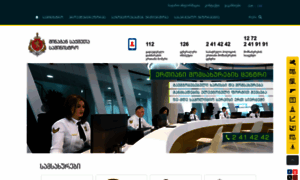
Police.hu's Digital Footprint: High PageRank, Poor Socialization
In the vast landscape of the internet, government websites occupy a unique and critical position. They serve as official conduits for information, public safety, and citizen services. Among these, Police.hu, the official online portal for the Hungarian Police, stands out as a fascinating case study. With a robust online history dating back to at least April 2011, the site has cultivated a significant digital presence, boasting impressive traffic figures and a high Google PageRank. However, a deeper dive into its analytics reveals a curious paradox: a powerhouse of authority that seems to struggle with social connectivity.
The Paradox of Police.hu: High Authority, Low Social Resonance
Police.hu is not just another government website; it's a vital resource for millions in Hungary and beyond. Its journey through the digital realm has seen it reach global rankings as high as 74,717, a testament to its broad reach and the importance of its content. More specifically, in its primary domain of Hungary, the site has consistently ranked highly, hitting position 201 at its peak and securing an impressive 106th spot in February 2026. This consistent performance underscores its essential role in the national digital infrastructure.
Unpacking the Traffic & Ranking Numbers
Looking at the most recent data available for February 2026, Police.hu commanded a global rank of 17,830 and a country rank of 106 in Hungary. These are significant figures for any website, let alone a government agency. The portal amassed a staggering 2.69 million visits in that month alone. While this represented a 5.86% decrease in traffic compared to January, the sheer volume of visitors highlights the portal's indispensable nature. Users spent a considerable average of 8 minutes and 11 seconds per session, navigating through an average of 2.63 pages per visit. This deep engagement suggests that visitors, once on the site, are often finding the information they seek, even if the overall traffic saw a slight dip. For a more detailed breakdown of these impressive figures, explore our analysis at Police.hu: Analyzing 2.69 Million Visits and Top Hungary Rank.
The PageRank Powerhouse: A Legacy of Trust
One of the most defining characteristics of Police.hu's digital footprint is its high Google PageRank. For those unfamiliar, Google PageRank, while no longer publicly updated, traditionally reflected a website's authority and importance based on the quality and quantity of links pointing to it. A high PageRank for a domain like Police.hu signifies a deep level of trust and credibility built over time, likely due to its official status, stable hosting (by the Republic of Hungary and National Infocommunications Service Company), and the constant influx of authoritative references from news outlets, other government bodies, and official documents. This intrinsic trust is a formidable asset in the online world. Interestingly, this contrasts with its "bad results" in terms of the Yandex topical citation index, suggesting different algorithmic interpretations of authority across search engines.
The Socialization Gap: A Missed Opportunity?
Despite its high PageRank and substantial traffic, one area where Police.hu conspicuously underperforms is social media. The provided context explicitly states that Police.hu is "poorly ‘socialized’ in respect to any social network." In an age where social media platforms have become primary sources of news, information, and community interaction, this represents a significant missed opportunity for a public service agency.
Why Social Engagement Matters for Public Services
For a police force, a robust social media presence isn't merely about trending or going viral; it's about essential public service. Here's why:
- Rapid Dissemination of Critical Information: In emergencies, social media can be faster than traditional websites for issuing alerts, warnings, and updates.
- Community Engagement & Trust Building: Interacting with the public, answering questions, and sharing crime prevention tips can foster a stronger sense of community and enhance public trust in law enforcement.
- Transparency and Accountability: Social platforms offer a direct channel for sharing policies, statistics, and addressing public concerns openly.
- Recruitment: Engaging with younger demographics on platforms they frequent is crucial for attracting new talent to the force.
- Combating Misinformation: An active official presence can help debunk rumors and provide factual corrections swiftly.
Strategies for Bridging the Social Divide
To enhance its social footprint, Police.hu could consider several actionable strategies:
- Strategic Platform Selection: Identify key platforms where the Hungarian public, especially target demographics for public safety messages, are most active (e.g., Facebook, X/Twitter, Instagram, TikTok, local Hungarian social networks).
- Content Diversification: Move beyond simple link-sharing. Develop engaging content like short informational videos, infographics on safety tips, Q&A sessions, community spotlight features, and behind-the-scenes glimpses.
- Two-Way Communication: Encourage comments, respond to queries, and host live Q&A sessions with officers or officials. This transforms the police's online presence from a broadcast channel to an interactive community hub.
- Emergency Communication Protocols: Establish clear guidelines for using social media during crises to deliver timely, accurate, and actionable information.
- Partner with Influencers/Community Leaders: Collaborate with trusted local figures to amplify important messages.
- Dedicated Social Media Team: Allocate resources for a dedicated team to manage, monitor, and strategize social media engagement effectively.
User Experience and Technical Performance
Beyond traffic and social engagement, the user experience and technical reliability of a website are paramount, especially for a government portal. According to MyWot and Google Safe Browsing analytics, Police.hu is deemed "quite a safe domain with no visitor reviews," which is a fundamental positive for any official website.
Engagement Metrics: Deep Dives and High Bounces
While the average session duration of 08:11 is impressive, indicating that users are spending a good amount of time on the site, the bounce rate of 62.66% warrants closer examination. A high bounce rate typically means that a significant percentage of visitors leave the site after viewing only one page. For Police.hu, this could imply several things:
- Quick Information Retrieval: Users might be finding exactly what they need quickly (e.g., a specific form, a news update, an emergency number) and then leaving. This isn't necessarily negative if their intent is fulfilled.
- Navigation Challenges: Some users might arrive, not find what they expect, or find the navigation unclear, leading them to leave without exploring further.
- Content Relevance: Visitors might land on pages that aren't fully relevant to their initial query.
Analyzing the specific entry and exit pages could provide valuable insights to optimize content structure and internal linking, ensuring users are guided to relevant information or encouraged to explore further when appropriate. Balancing quick access to critical info with opportunities for deeper engagement is key.
Uptime and Reliability: The Foundation of Trust
For a public safety website, uptime and quick response times are non-negotiable. The reliability of Police.hu is crucial for citizens seeking urgent information or assistance. While specific historical uptime percentages aren't provided in the context, the mention of "uptime history" and "response times" graphs indicates that these metrics are actively monitored. A consistent and low response time is vital, as any delay can be frustrating and, in critical situations, potentially detrimental. Ensuring high availability is a continuous operational priority for such an essential digital service. For ongoing insights into the platform's stability, check out our report: Is Police.hu Reliable? Uptime, Traffic Trends, and Engagement.
Enhancing Police.hu's Digital Footprint: Recommendations
Police.hu is a testament to the power of official authority in building a strong online presence. However, the digital landscape is dynamic, and continuous improvement is essential. To further solidify its position and better serve the Hungarian public, Police.hu could consider:
- Integrated Digital Strategy: Develop a cohesive strategy that integrates website content, SEO efforts, and social media engagement rather than treating them as separate silos.
- User Experience (UX) Review: Conduct regular UX audits to identify pain points in navigation, content readability, and mobile responsiveness, which could contribute to the bounce rate.
- Analytics-Driven Optimization: Leverage the wealth of traffic data to understand user behavior, optimize high-traffic pages, and improve content that leads to high bounce rates.
- Proactive Social Media Engagement: Shift from a passive online presence to an active, engaging, and responsive social media strategy that aligns with the police force's public service mission.
- Feedback Mechanisms: Implement more visible feedback mechanisms on the website and across social channels to gather direct input from citizens.
In conclusion, Police.hu represents a fascinating dichotomy: a digitally authoritative and heavily trafficked platform that, by its very nature, commands trust and attention, yet remains largely untapped in the realm of social interaction. By strategically addressing its "poor socialization" and refining its user engagement strategies, Police.hu has the potential to transform from a vital information repository into a dynamic, interactive, and even more indispensable hub for public safety and community dialogue in Hungary.